
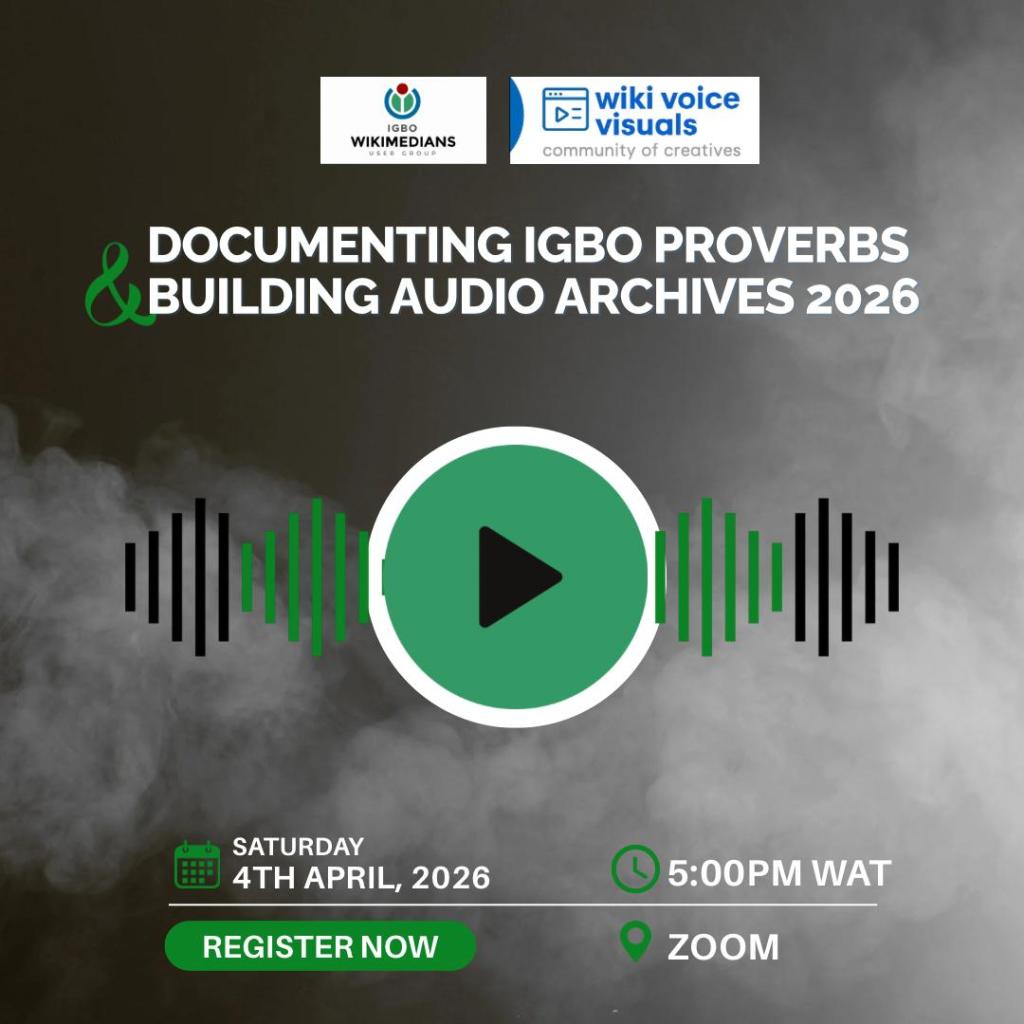
In a significant step toward preserving the rich oral heritage of the Igbo people, the Igbo Wikimedians User Group sponsored a group of creatives called Wiki Voice Visuals who successfully organized Documenting Igbo Proverbs and Building Audio Archives, a Wikimedia project dedicated to the preservation and promotion of Igbo cultural wisdom through the documentation of traditional proverbs (Ilu Igbo) in audio format.
The project was implemented as a hybrid event, combining online collaboration with in-person field activities, bringing together volunteers, community members, and everyday citizens in a shared effort to safeguard a living tradition.
Igbo proverbs occupy a central place in the life of the Igbo people. They are the vehicles through which wisdom is passed from one generation to the next, the language through which elders counsel, communities settle disputes, and identity is affirmed. Yet today, many of these proverbs are gradually disappearing eroded by language shift, rapid urbanization, and the widening gap between generations. What the grandfather knew by heart, the grandchild may never hear.
Project Highlights
This project was launched online on the 4th of April 2026, with the Street and Market Interview Challenge taking place on the 10th of April 2026 in Awka, Anambra State, it ran from 4th up until the 18th of April 2026. The two-week period yielded significant contributions across documentation, audio archiving, and community engagement.

With over 10 dedicated participants, the project was focused on recording Igbo proverbs in audio format and archiving them on open platforms accessible to all, the project ensures that these expressions of collective wisdom are not lost to time but remain alive, searchable, and available to future generations of Igbo speakers, scholars, and cultural custodians wherever they may be in the world.


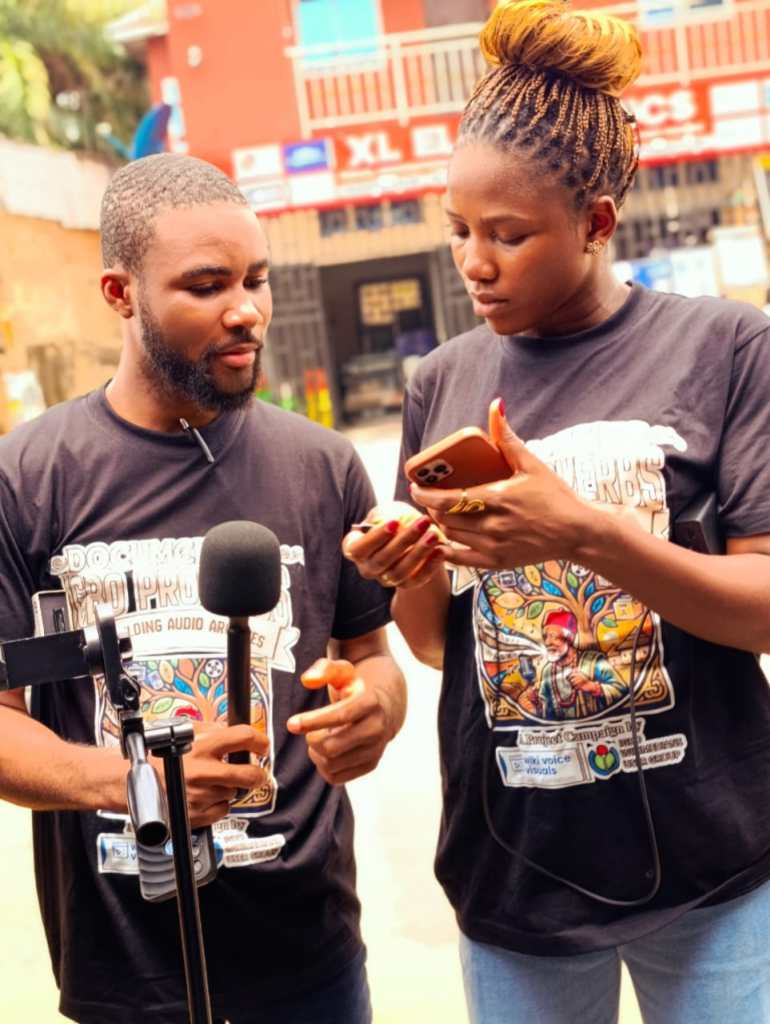
One of the most vibrant and memorable aspects of the project was the Street and Market Interview Challenge, which took place on the streets and within the bustling stalls of Eke Awka Market in Awka, Anambra State, Nigeria. Volunteers went directly into the heart of the community, approaching Igbo indigenes and inviting them to share a proverb they know in their own words, in their own voice along with its meaning. It was knowledge drawn not from books or classrooms, but from lived experience, from what grandmothers whispered and elders declared at gatherings.
The energy was remarkable. Some participants paused, smiled, and reached deep into memory before speaking. Others needed no prompting at all, offering proverbs with the ease of someone reciting something they had carried their whole life. Each response was a small window into a world of wisdom that has been passed down through generations and in that moment, was being preserved for generations yet to come. It was, by every measure, a wonderful experience a reminder that the knowledge we seek is not always in archives and libraries. Sometimes it lives in the market, in the crowd, in the ordinary person going about their day, waiting only to be asked.
Key Outcomes

- Enriching the Igbo Wiktionary: Volunteer contributions resulted in 30 new Igbo proverbs being created on the Wiktionary, with 50 new audio recordings attached to their relevant proverb entries giving the written words a living, spoken voice.
- Enriching Wikimedia Commons: 50 audio recordings of Igbo proverbs were uploaded to Commons, each accompanied by captions and descriptions written in both English and Igbo. A dedicated category Igbo Proverbs was created to house all recordings for easy discovery and access.
- Fostering Community Growth: The Street and Market Interview Challenge brought the project into public life. Volunteers went into the streets and into Eke Awka market, asking people to share a proverb they know and explain its meaning. Beyond the recordings, the exercise drew new followers to the Igbo Wikimedia social media pages, expanding the community’s reach organically.
- Improved Volunteer retention: Participants who are part of the newly growing community in this part of Nigeria were taught a new Wikimedia project and were carried along.
Challenges
- Declining Knowledge of Igbo Proverbs: One of the most significant observations from the field was that a large number of participants; including native Igbo speakers could not readily recall proverbs. This points to a growing generational gap in the transmission of oral traditions and underscores the urgency of this documentation work. The language is alive, but its deeper wisdom is quietly fading.
- Confusion Between Proverbs and Riddles: A recurring challenge during interviews was participants presenting riddles (gwam gwam gwam) as proverbs (ilu). While both are valuable forms of Igbo oral expression, they are distinct.
Looking Ahead
- Intensify Documentation Efforts: Given the evident erosion of proverb knowledge among the general public, the project should be scaled up significantly in scope, frequency, and geographic spread. More communities across Igboland should be visited, and the documentation drive should be treated with the urgency it deserves before this knowledge is lost entirely.
- Develop Strategies to Engage Men on Camera: Future sessions should explore approaches to make male participants more comfortable such as offering audio-only recording options, conducting group interviews where the camera feels less focused on one individual.
- Take Wiki to the Streets: The project has demonstrated that public spaces markets, motor parks, community squares are rich grounds for engagement. Rather than limiting Wikimedia awareness to schools and institutions, future activations should deliberately target everyday public spaces where people gather. This approach not only yields richer oral content but also introduces Wikipedia and its sister projects to audiences who may never encounter them otherwise.
- Expand and Elaborate the Project: The enthusiasm expressed by members of the public many of whom urged the team to continue and do more is a strong signal. This project has the potential to grow into something much larger: a structured, ongoing Igbo oral heritage archive that feeds not just Wikimedia but schools, cultural institutions, broadcasters, and researchers. A more elaborate edition with dedicated funding, trained volunteers, and a multi-city rollout should be planned for the next phase.
We invite more Wikimedians, Video editors, Audio editors to join Wiki Voice Visuals future projects. Together, we can showcase our african culture to the world through Audios and Videos.
Join the movement! Create your Wikimedia account today and start contributing.
Important Links
- For more details about the event, visit Documenting_Igbo_Proverbs_and_Building_Audio_Archives_2026
- To read more about Wiki Voice Visuals, visit: Wiki Voice Visuals on Meta-Wiki
- To join the movement, visit our page on Wikimedia Commons: Wiki Voice Visuals/Members


Can you help us translate this article?
In order for this article to reach as many people as possible we would like your help. Can you translate this article to get the message out?
Start translation