 The second day of the conference started with a cooler and less humid weather (although this did not last!), although my brain felt a wee bit foggy from a lack of sleep (and I almost crashed while running on the hotel treadmill, at 14.5km/h!), and the plenary talk of my friend of many years Sylvia Früwirth-Schnatter on horseshoe priors and time-varying time series (à la West). With a nice closed-form representation involving hypergeometric functions of the second kind (my favourite!), with the addition of a triple-Gamma prior. Sylvia stressed on the enormous impact of the prior choice on change-point detection, which was already the point in the original horseshoe paper (as opposed to George’s Lasso prior). Without incorporating any specific modelling on potential change-point, fair enough given that the parameter is moving with time, unhindered. Her MCMC choices involved discrete parameters with Negative Binomial and Poisson parameters, allowing for partially integrated or collapsed solutions. Possibly further improved by Swendsen-Wang steps.

I then attended the (advanced) Langevin session after agonising upon my choice for a wealth of options! Sam Power presented a talk linking simulation with optimisation targets, over measure spaces. With Wasserstein gradient flow algorithms that resemble Langevin algorithms once discretised by a particle system. (A natural resolution producing a somewhat unnatural form of measure estimator since made of Dirac masses, from which very little can be learned.) Then [my Warwick colleague & coauthor] Any Wang on underdamped Langevin diffusions. when Poincaré‘s inequality fails, but convergence (in total variation) still occurs. Followed by Peter Whalley on splitting methods (where random hypergeometric subsampling dominates Robbins-Monro) and stochastic gradient algorithms, in a connected (to the previous talks) way since involving underdamped aspects. (With a personal discovery of Polyak’s heavy ball method.)

The afternoon session saw me facing a terrible dilemma with three close friends talking at the same time! Eventually opting for PDMPs, over simulation-based inference and recalibration for approximate Bayesian methods. Kengo Kamatani gave a general introduction to PDMPs, before explaining the automated implementation he considered with Charly Andral (during Charly’s visit to ISM, Tokyo, two summers ago). Towards accelerating the generation of the jump time. Then Luke Hardcastle applied PDMPs for survival prediction, using spike & slab priors and sticky PDMPs. And Jere Koskela (formerly Warwick) extended zig-zag sampling to discrete settings (incl. Kingman’s coalescent.)
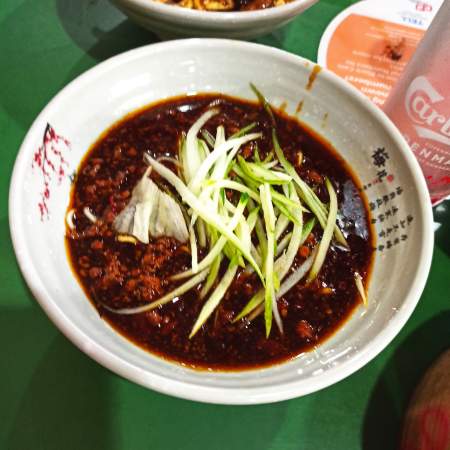
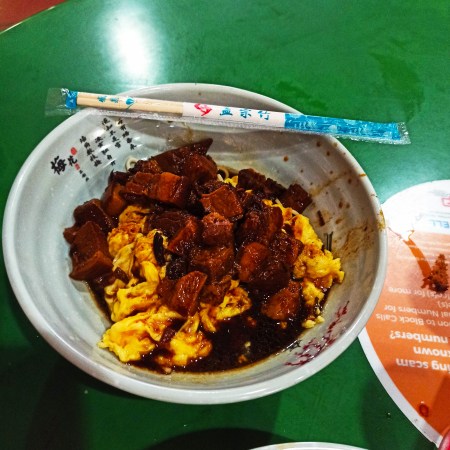
The (rather long) day was not over yet since we had planned an extra on-site OWABI seminar & webinar with two participants in the conference, Filippo Pagani (Warwick and OCEAN postdoc) using fusion for federated learning, with a trapezoidal approximation, and Maurizio Filippone on GANs as hidden perfect ABC model selection, a GAN providing an automatic density estimator… With astounding Gemini-generated cartoons! Videos are soon to be available. A big congrats to the speakers who managed to convey their ideas and results despite the late hour! (On the extra-academic side, I was invited last night to a genuine Szechuan dinner in Chinatown, with a large array of spicy dishes if not that spicy!, and a rare opportunity to taste abalone. And bullfrogs. Quite a treat! And a good reason to skip dinner altogether!)



 Minus one day at
  A wee stressful trip, since the races in Caen cancelled all buses and delayed the taxi enough to miss the train to Paris by 30s, catching the next available one leaving me less than one hour between the arrival of the train (delayed by construction work on the rail line) and boarding the flight at Charles de Gaulle airport, but fortunately the RER trains in Paris were running okay, there were no queues in the airport, and I thus made it in time with a bit of post-marathon jogging! (Only to be delayed at departure by one hour for stormy conditions over Germany and Austria). All this exercise proved helpful to sleep soundly and lengthily in the plane!


 Xi'an's Og