Archive for exam

BayesComp 2025.2

Posted in Kids, pictures, Statistics, Travel, University life with tags , , , , , , , , , , , , , , , , , , , , , , , , , , , , , , , , , , , , , , on June 19, 2025 by xi'an


The main BayesComp²⁵ conference started with Pierre Jacob’s plenary talk on his recent advances on coupling for unbiased MCMC—currently ERC grantee on that topic—.  Raising lazy questions like using a different target or transition kernel for the second chain in the coupling, connecting the Poisson equation and control variates, handling the signed issue with the unbiased approximations. Interestingly, they obtain an unbiased estimator of the asymptotic variance of the unbiased estimator. And a correction for self-normalised importance sampling, which has some connections with our 1996 (?) pinball sampler. Also an evaluation of the median of means, rather than the average of means, which is a thing I had been (lazily) contemplating for a while  (On the greedy side, as I was writing my recovery exam for my Monte Carlo course, I realised the results Pierre presented could be somewhat recycled into exam problems!)

My first parallel session was on gradient-based methods with a talk by Francesca Crucinio on proximal particle Langevin algorithms (similar to the one she gave in PariSanté last year), a talk by Zhihao Wang on stereographic multiple try Metropolis(-Rosenbluth-Teller) that unsurprisingly recovers ergodicity thanks to the compactness of the ball. For which I wonder why a Normal proposal makes complete sense since one could consider a mover after the projection instead and why iid rather than repelling multiple proposals are used… The last speaker was just out from the plane from California, Siddharth Vishwanath who spoke about repelling-attracting HMC. With very nice animations of HMC, if reaching the main point of using both negative and positive frictions a few minutes before the session finished. The method preserves volume and potential, if not energy.

Speaking of which (energy), I find myself struggling with my less than 6 hours of sleep since arrival during the first afternoon session, despite a fiery hot spot lunch, which means in plainer terms that I alas dozed in and out of the talks. The second session saw Jack Jewson exposing in deeper details the exact PDMP algorithm for Gibbs measures  Jeremias Knoblauch mentioned yesterday. And Jonathan Huggins as well, using Gaussian processes as proxies for expected likelihoods, with lower guarantees than pseudo-marginal versions. In a mildly connected way, Robin Ryder went through the resolution of the ecological inference challenge they produce with Nicolas Chopin and Théo Valdoire (all authors with whom I am connected, Théo being a brillant student of our MASH Master last year and now in Harvard, hopefully till the end of his PhD!)
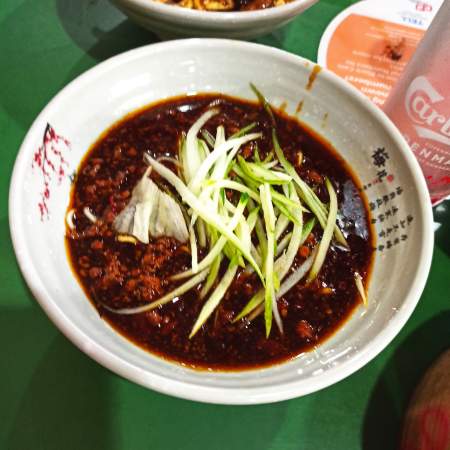
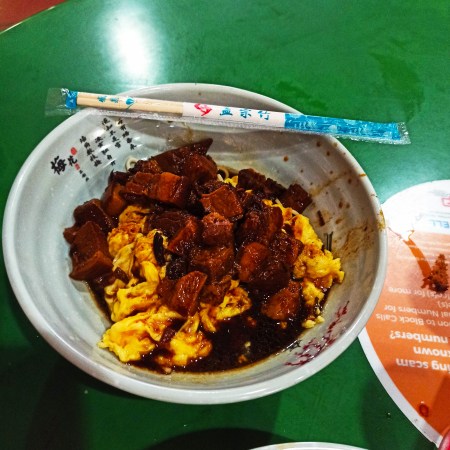
On the extra-academic curriculum, I had a yummy dinner in the Maxwell Hawker (street) food centre, incl. Xiao Long Bao that cooled down fast enough to avoid the usual scalding effect, plus rojak a mixed fruit and vegetable fried in a peanut sauce that I had never tasted before, popiah (ditto), chili noodles, and an appam with durian deepfried balls as a fabulous and unexpected dessert.

Monte Carlo [exam]

Posted in Kids, pictures, R, Statistics, University life with tags , , , , , , , , , , , , , , , , , on January 22, 2025 by xi'an

My final exam for the Monte Carlo course I taught last semester proved too much of a challenge for my fourth year students, despite being rather elementary and centred on accept-reject algorithms and importance/bridge sampling. One of the problems was a decomposition of the truncated Normal simulation method proposed by Marsaglia in 1963, found on X Validated!, which I had posted on the course Teams forum (and discussed on the ‘Og!). Obviously overlooked by the students as hardly anyone solved the central question… Quite a disappointment (and more exams to grade for the resit exam in June!)

Monte Carlo swindles

Posted in Statistics with tags , , , , , , , , , on April 2, 2023 by xi'an

While reading Boos and Hugues-Olivier’s 1998 American Statistician paper on the applications of Basu’s theorem I can across the notion of Monte Carlo swindles. Where a reduced variance can be achieved without the corresponding increase in Monte Carlo budget. For instance, approximating the variance of the median statistic Μ for a Normal location family can be sped up by considering that

\text{var}(M)=\text{var}(M-\bar X)+\text{var}(\bar X)

by Basu’s theorem. However, when reading the originating 1973 paper by Gross (although the notion is presumably due to Tukey), the argument boils down to Rao-Blackwellisation (without the Rao-Blackwell theorem being mentioned). The related 1985 American Statistician paper by Johnstone and Velleman exploits a latent variable representation. It also makes the connection with the control variate approach, noticing the appeal of using the score function as a (standard) control and (unusual) swindle, since its expectation is zero. I am surprised at uncovering this notion only now… Possibly because the method only applies in special settings.

A side remark from the same 1998 paper, namely that the enticing decomposition

\mathbb E[(X/Y)^k] = \mathbb E[X^k] \big/ \mathbb E[Y^k]

when X/Y and Y are independent, should be kept out of reach from my undergraduates at all costs, as they would quickly get rid of the assumption!!!

inverse Gaussian trick [or treat?]

Posted in Books, Kids, R, Statistics, University life with tags , , , , , , , , , , , , , , on October 29, 2020 by xi'an

When preparing my mid-term exam for my undergrad mathematical statistics course, I wanted to use the inverse Gaussian distribution IG(μ,λ) as an example of exponential family and include a random generator question. As shown above by a Fortran computer code from Michael, Schucany and Haas, a simple version can be based on simulating a χ²(1) variate and solving in x the following second degree polynomial equation

\dfrac{\lambda(x-\mu)^2}{\mu^2 x} = v

since the left-hand side transform is distributed as a χ²(1) random variable. The smallest root x¹, less than μ, is then chosen with probability μ/(μ+x¹) and the largest one, x²=μ²/x¹ with probability x¹/(μ+x¹). A relatively easy question then, except when one considers asking for the proof of the χ²(1) result, which proved itself to be a harder cookie than expected! The paper usually referred to for the result, Schuster (1968), is quite cryptic on the matter, essentially stating that the above can be expressed as the (bijective) transform of Y=min(X,μ²/X) and that V~χ²(1) follows immediately. I eventually worked out a proof by the “law of the unconscious statistician” [a name I do not find particularly amusing!], but did not include the question in the exam. But I found it fairly interesting that the inverse Gaussian can be generating by “inverting” the above equation, i.e. going from a (squared) Gaussian variate V to the inverse Gaussian variate X. (Even though the name stems from the two cumulant generating functions being inverses of one another.)

unbiased estimators that do not exist

Posted in Statistics with tags , , , , , , , on January 21, 2019 by xi'an

When looking at questions on X validated, I came across this seemingly obvious request for an unbiased estimator of P(X=k), when X~B(n,p). Except that X is not observed but only Y~B(s,p) with s<n. Since P(X=k) is a polynomial in p, I was expecting such an unbiased estimator to exist. But it does not, for the reasons that Y only takes s+1 values and that any function of Y, including the MLE of P(X=k), has an expectation involving monomials in p of power s at most. It is actually straightforward to establish properly that the unbiased estimator does not exist. But this remains an interesting additional example of the rarity of the existence of unbiased estimators, to be saved until a future mathematical statistics exam!